
JAMES H. CONE RACIAL JUSTICE RESOURCES
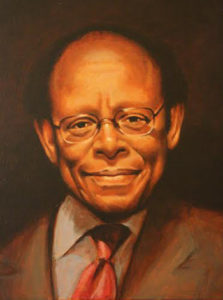
art by Barney Judge
Faithfulness to the God Jesus reveals includes doing some homework, especially for those who don’t encounter the realities of white supremacy in our day-to-day lives. This page includes resources for that purpose, starting with James H. Cone’s brilliant and searing book, The Cross and the Lynching Tree, which situates the cross of Jesus as a lynching.
According to the Tuskegee Institute, 4,743 people were lynched between 1882 and 1968 in the United States, including 3,446 African Americans. This was a campaign of domestic terrorism. While theologians of privilege debate the intricacies of “atonement theory” the horror of the cross has been revealed before our eyes on the lynching tree, largely neglected by much of the church.
The portrait of James Cone, above, is an original artwork by Barney Judge, inspired by reading The Cross and the Lynching Tree, our 2019 Lenten read.
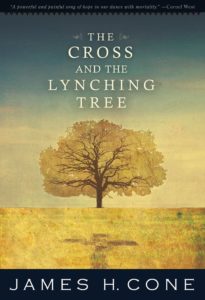 So this is a great place to start, The Cross and the Lynching Tree, and/or to listen to the six podcasts that Emily Swan created as a guide for this important book.
The Cross and the Lynching Tree Podcasts with Emily Swan
The Cross and the Lynching Tree, Intro
The Cross and the Lynching Tree, Week 1
The Cross and the Lynching Tree, Week 2
The Cross and the Lynching Tree, Week 3
The Cross and the Lynching Tree, Week 4
The Cross and the Lynching Tree, Week 5
The Cross and the Lynching Tree, Week 6
Series link (for RSS readers): The Cross and the Lynching Tree, 2019 Lenten podcast
Podcasts
Teaching Hard History
The Nod
The Stoop
Another Round
Code Switch
News Feeds Featuring African-American Journalists
The Michigan Chronicle
The Root
News One
Movies About or From an African-American Experience
13th A documentary about the 13th Amendment to abolish slavery and its aftermath—a period of the systematic brutalization of African Americans in the Jim Crow era (legally enforced discrimination).
I Am Not Your Negro In 1979, James Baldwin wrote a letter to his literary agent describing his next project, Remember This House. The book was to be a revolutionary, personal account of the lives and successive assassinations of three of his close friends—Medgar Evers, Malcolm X and Martin Luther King, Jr. At the time of Baldwin’s death in 1987, he left behind only thirty completed pages of his manuscript. Now, in his incendiary new documentary, master filmmaker Raoul Peck envisions the book James Baldwin never finished. The result is a radical, up-to-the-minute examination of race in America, using Baldwin’s original words and flood of rich archival material. I Am Not Your Negro is a journey into black history that connects the past of the Civil Rights movement to the present of #BlackLivesMatter. It is a film that questions black representation in Hollywood and beyond. And, ultimately, by confronting the deeper connections between the lives and assassination of these three leaders, Baldwin and Peck have produced a work that challenges the very definition of what America stands for.
The African Americans: Many Rivers to Cross (2013) This six-part PBS documentary series chronicles the entire African-American experience, from slavery to President Barack Obama’s reelection. More than 30 historians were consulted during the making of the documentary. The series won a Peabody Award.
The Black Power Mixtape 1967–1975 (2011) Civil rights icons from Dr. Martin Luther King, Jr. to Huey P. Newton and Harry Belafonte are featured in this documentary comprised of newly found footage shot during the height of the black power movement. Modern African-American activists like rapper Talib Kweli and singer Erykah Badu provide commentary over top of the film’s powerful historical images.
The Butler (2013) Director Lee Daniels is one of Hollywood’s most powerful black filmmakers and his historical drama The Butler cemented his status by collecting over $175 million at the box office. The movie follows an African-American butler who works at the White House for three decades, starting in 1957. The film features an all-star cast of black actors including Forest Whitaker, Oprah Winfrey and Terrence Howard.
Fruitvale Station (2013) With the ongoing debate over policing practices toward African Americans, the plot of Fruitvale Station remains poignant. Directed by Ryan Coogler and starring Michael B. Jordan—the team behind 2015’s Creed—this film follows the true story of Oscar Grant, a young man who was killed in 2009 by transit police in Oakland, California. Jordan and Oscar winner Octavia Spencer give powerful performances.
Mississippi Damned (2009) Filmmaker Tina Mabry wrote and directed this indie drama based on her own life growing up in Tupelo, Mississippi. The movie takes a hard look at the effects the cycle of poverty can have on children and families.
The Trials of Muhammad Ali (2013) Boxer Muhammad Ali’s battles outside the ring take the spotlight in this documentary. Ali’s refusal to fight in the Vietnam War and his conversion to Islam are discussed by friends and historians. Interview subjects include trainer Angelo Dundee and Minister Louis Farrakhan.
Undefeated (2011) This film about a struggling Memphis high school football team was the first documentary directed by an African American to win an Oscar. The movie has been overwhelmingly praised by critics, racking up a 96 percent rating on Rotten Tomatoes.
Books
Stamped from the Beginning: The Definitive History of Racist Ideas in America by Ibram X. Kendi
Raising White Kids: Bringing Up Children in a Racially Unjust America by Jennifer Harvey
Black Pain: It Just Looks Like We’re Not Hurting by Terrie M. Williams
The Short and Tragic Life of Robert Peace by Jeff Hobbs This moving biography recounts the life of Robert Peace, a young man who escaped the streets of Newark, New Jersey, to attend Yale University — only to lose his life after graduating
The Fire Next Time by James Baldwin One of James Baldwin’s most important book of essays, The Fire Next Time explores themes of race, religion and identity.
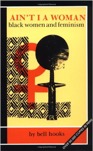 Ain’t I A Woman: Black Women and Feminism by Bell Hooks For the reader who wants to learn more about black feminism, Ain’t I A Woman is considered one of the most important and comprehensive works on how sexism and misogyny specifically affects women of color.
Negroland: A Memoir by Margo Jefferson Margo Jefferson shares a bold and thought-provoking memoir on her upbringing as the daughter of black socialites in 1960s Chicago.
The Bluest Eye by Toni Morrison Toni Morrison’s first novel perfectly captures the effects of racism and colorism, telling the story of an 11-year-old black girl with low self-esteem who prays desperately for her eyes to become blue.
Race Matters by Cornel West Still considered one of activist Cornel West’s most important books, Race Matters bluntly takes on everything from affirmative action, to black crime, to religion within the black community—and what solutions, if any, there are.
Invisible Man by Ralph Ellison In this seminal 1952 novel, an unnamed narrator recounts his epic life-story, from his coming-of-age in a rural Southern town, to his migration to the violent streets of Harlem.
The Immortal Life of Henrietta Lacks by Rebecca Skloot This is the true story of Henrietta Lacks, a poor black woman whose cells from cervical cancer have been used by scientists for developing advances in everything from cloning, gene mapping, cancer treatment and polio vaccines.
 Why Are All the Black Kids Sitting Together in the Cafeteria? by Beverly Daniel Tatum Through research and case studies psychologist Beverly Daniel Tatum confronts the subtle ways in which racism dictates the ways both white and non-white people navigate the world.
Slavery by Another Name by Douglas A. Blackmon Writer Douglas A. Blackmon exposes the horrific aftermath of the Civil War and the abolishment of slavery, when thousands of black people were unfairly arrested and then illegally “sold” into forced labor as punishment.
Theologies
The Cross and the Lynching Tree by James H. Cone
God of the Oppressed by James H. Cone
Jesus and the Disinherited by Howard Thurman
The Black Christ by Kelly Brown Douglas
Stand Your Ground: Black Bodies and the Justice of God by Kelly Brown Douglas
What’s Faith Got to Do With It?: Black Bodies/Christian Souls by Kelly Brown Douglas
Where the Edge Gathers: Building a Community of Radical Inclusion by Yvette A. Flunder
Our Lives Matter: A Womanist Queer Theology by Pamela R. Lightsey
Sisters In the Wilderness: The Challenge of Womanist God-Talk by Delores S. Williams
Too Heavy a Yoke: Black Women and the Burden of Strength by Chanequa Walker-Barnes
Writers
Slave poet Phillis Wheatley
Harlem Renaissance writer Langston Hughes
Pulitzer-winning poet Natasha Trethewey
Expatriate author James Baldwin
Pulitzer-nominated poet Maya Angelou
Roots author Alex Haley
Invisible Man author Ralph Ellison
Nobel Prize winner Toni Morrison
Feminist writer Bell Hooks
The Color Purple author Alice Walker
Native Son author Richard Wright
Science fiction writer Octavia Butler
Poet and professor Nikki Giovanni
contact our pastors


Have a question for one of our pastors? Click on a photo (above) to send a message to Emily or Daniel. You can also contact our office through our contact page.
Sunday Services
11am–12pm Sunday Mornings
In-person/Zoom hybrid service
every Sunday at
2309 Packard Street, Ann Arbor
(Social Hall of St. Clare Episcopal Church and Temple Beth Emeth)